The challenge
Make the right information easier to find.
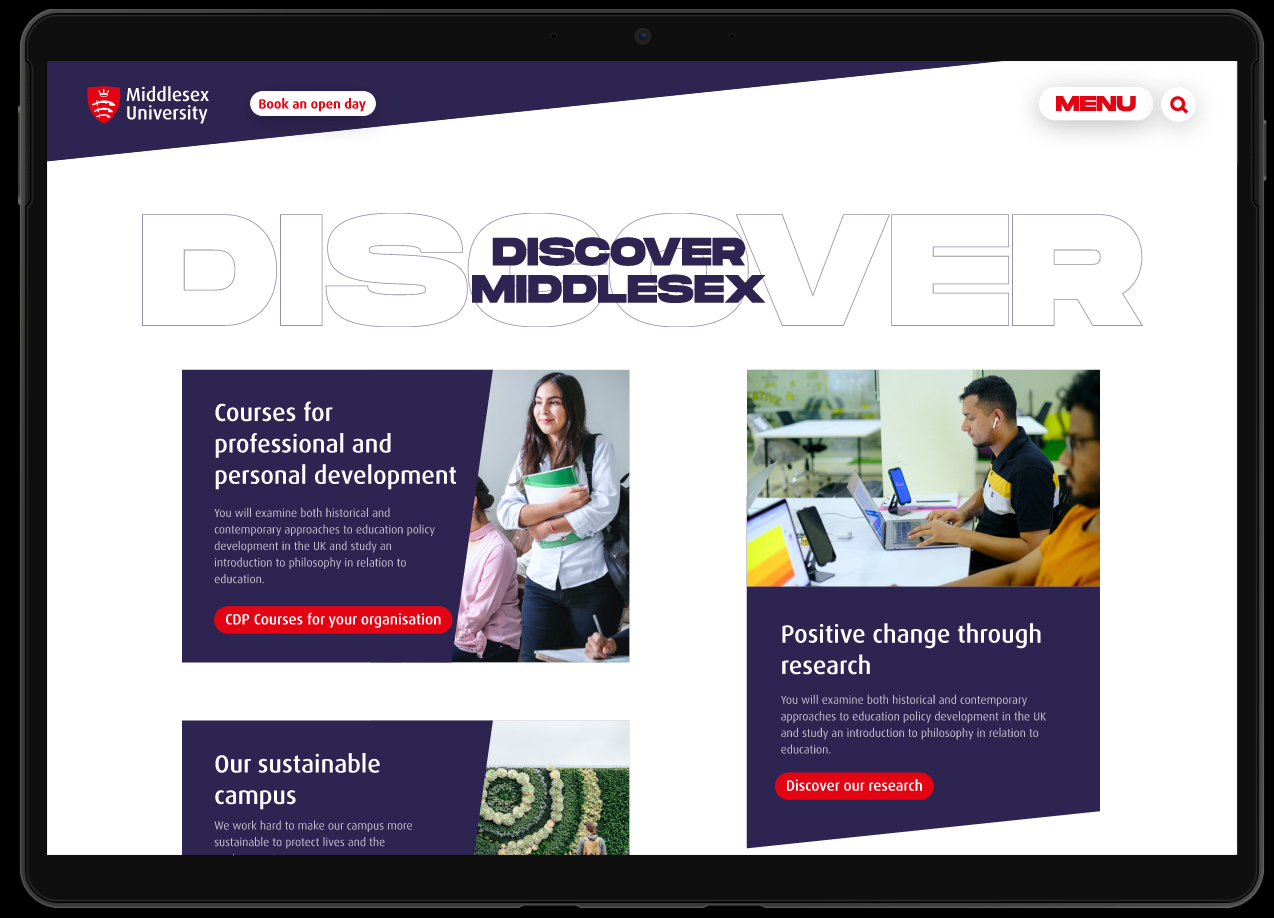
The work addressed complex navigation, dense content and different information needs across student groups. Course fees, modules and entry requirements mattered alongside staff information and employability.
My contribution
Bring research into the structure.
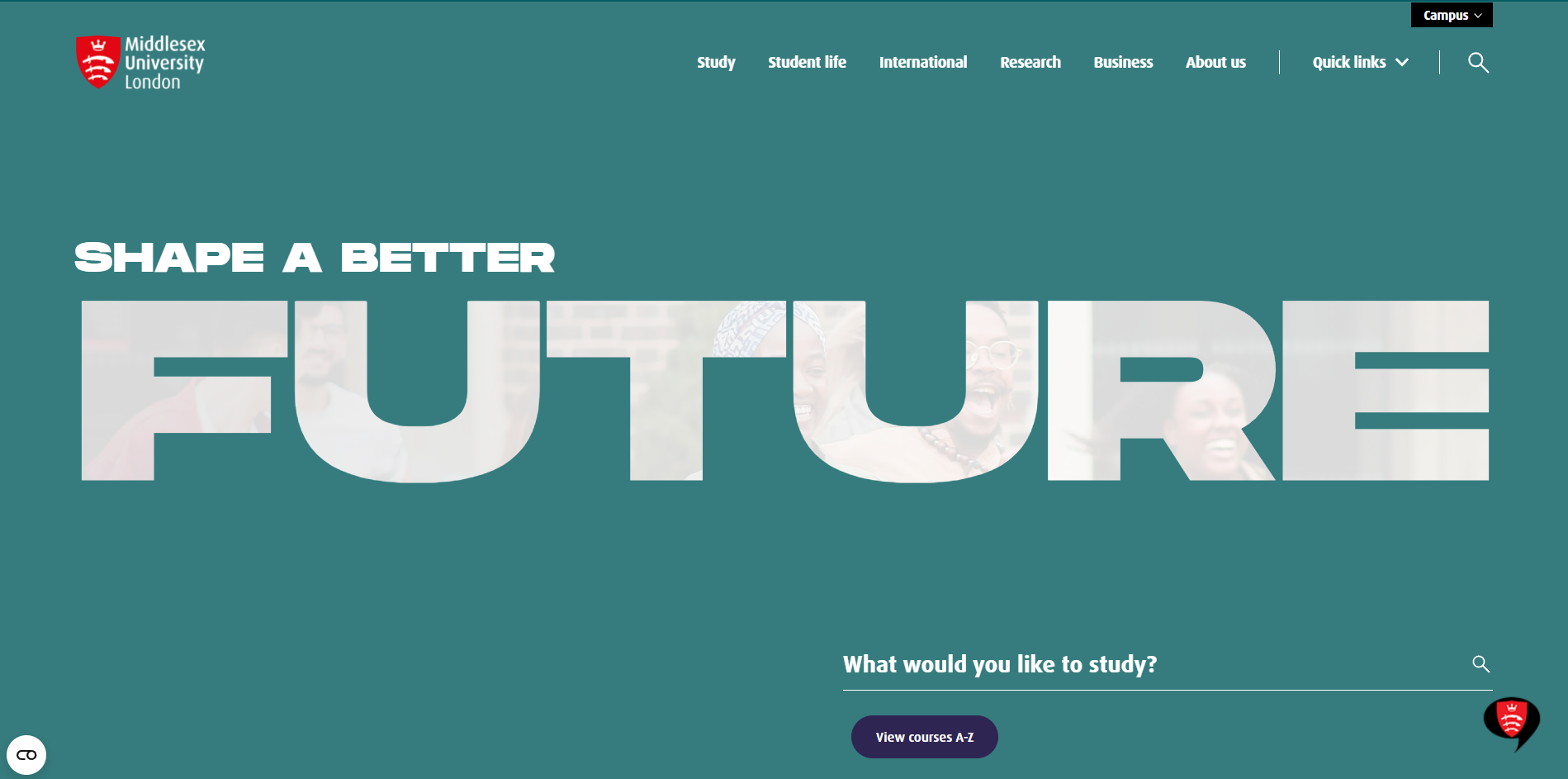
I led design activity across research, information architecture and prototyping. I conducted interviews and stakeholder workshops and used tools including Hotjar, Google Analytics and Optimal Workshop to understand the existing experience.
Design decisions
Connect findings to specific changes.
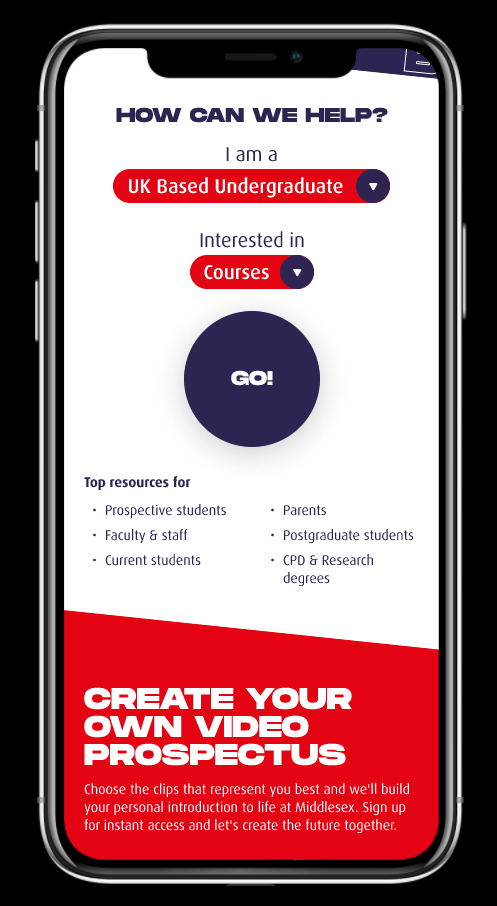
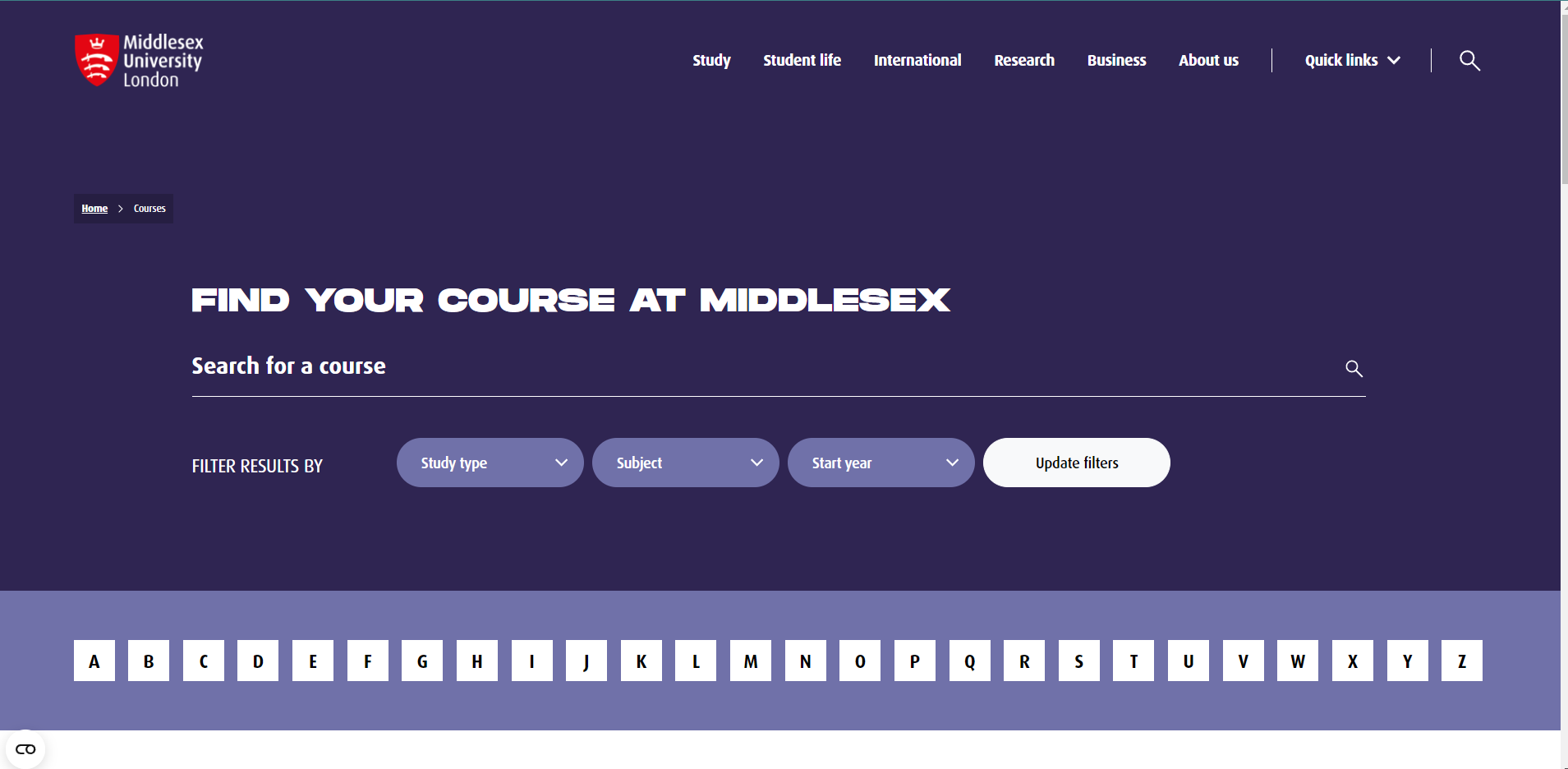
Research informed work on navigation, content hierarchy, filters and course discovery. Card sorting and tree testing supported the information architecture, while Figma prototypes made the proposed structure tangible for stakeholders.
View the mobile concepts
Testing and handover
Refine the design with users.
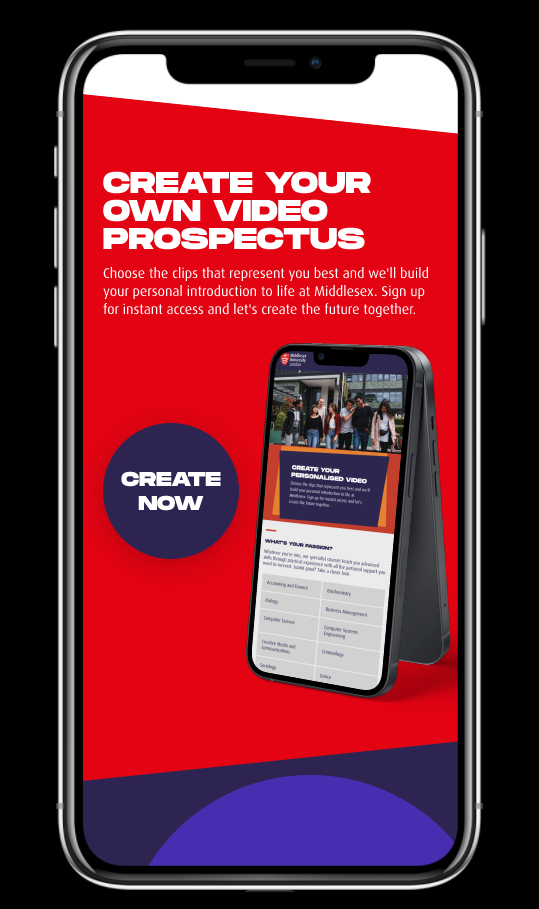
I used moderated and unmoderated testing to examine how people found information and moved through the prototype. The design files, specifications and research feedback were prepared for the development team.
What the work produced
A researched design and development handover.
The case study demonstrates research, interaction design and prototyping. My delivery scope covered design and development handover. Postlaunch performance was not measured within this case study.
Read the design evidence
The course search image makes the information architecture tangible: study type, subject and study year organise the route into course information. Research, card sorting and tree testing informed the structure; moderated and unmoderated sessions examined how people moved through the prototype.
My scope connected discovery, structure and interaction design to the specifications and research feedback handed to development.
The principle behind the work
Information architecture is a design decision about what people need to do next.